
Why the Rhine Gorge
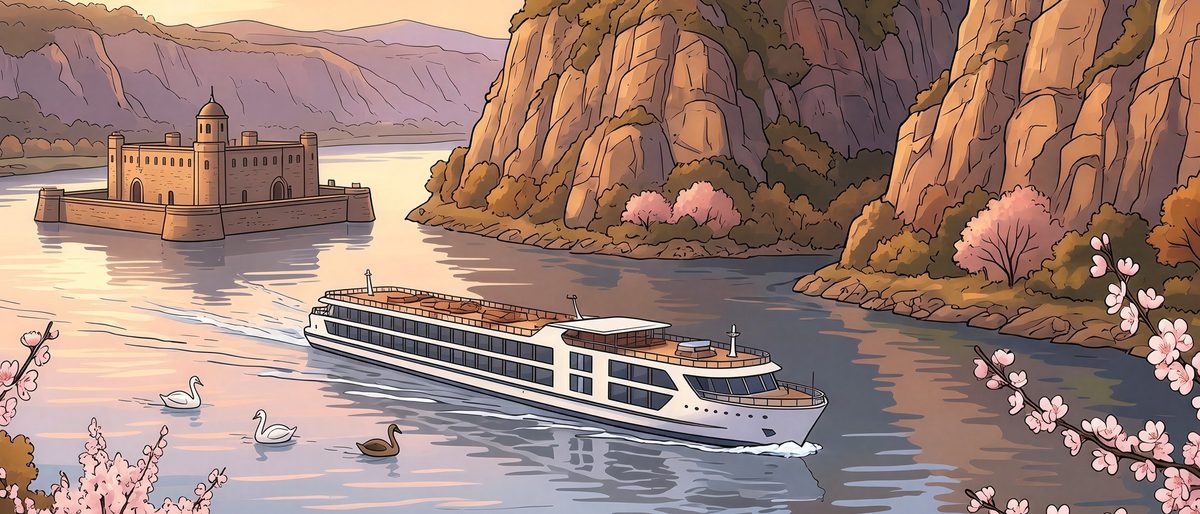
Between Bingen and Rüdesheim in the south and Koblenz in the north, the Rhine leaves the open plain and cuts a deep, winding valley through the Rhenish Slate Mountains. For about 65 kilometres the river passes some sixty towns and villages and forty castles and forts, with vineyards terraced into the steep slopes between them. For centuries this was one of the great trade routes of Europe, and the castles were built to defend it and to tax it. UNESCO inscribed the valley as the Upper Middle Rhine Valley in 2002. From the deck of a river ship it is the Rhine at its most romantic.
Seeing it from the river
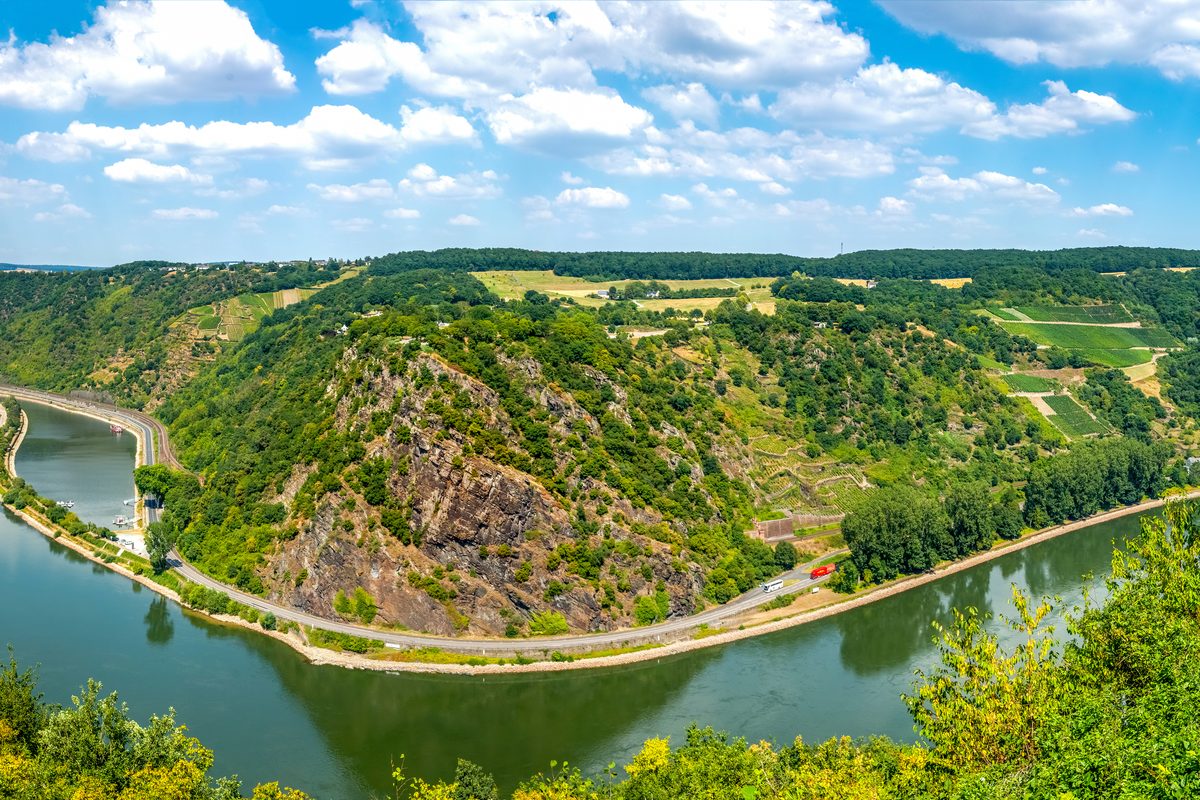
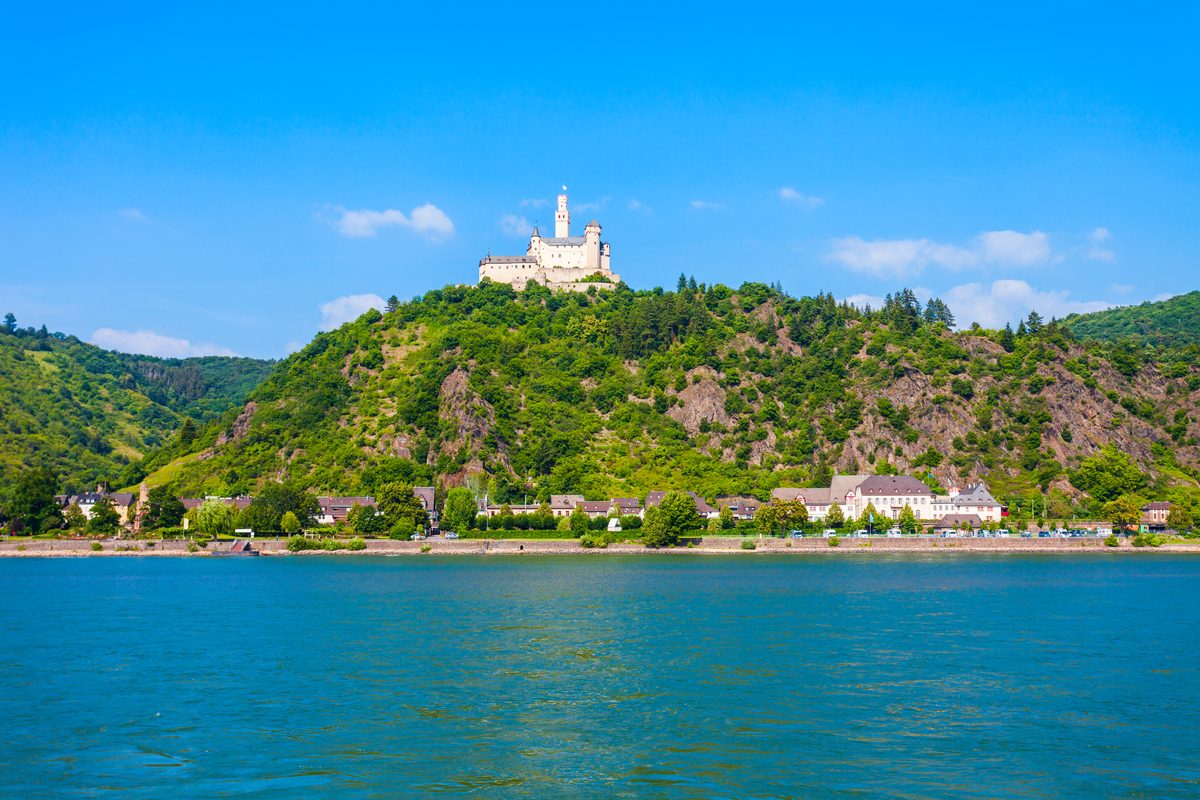
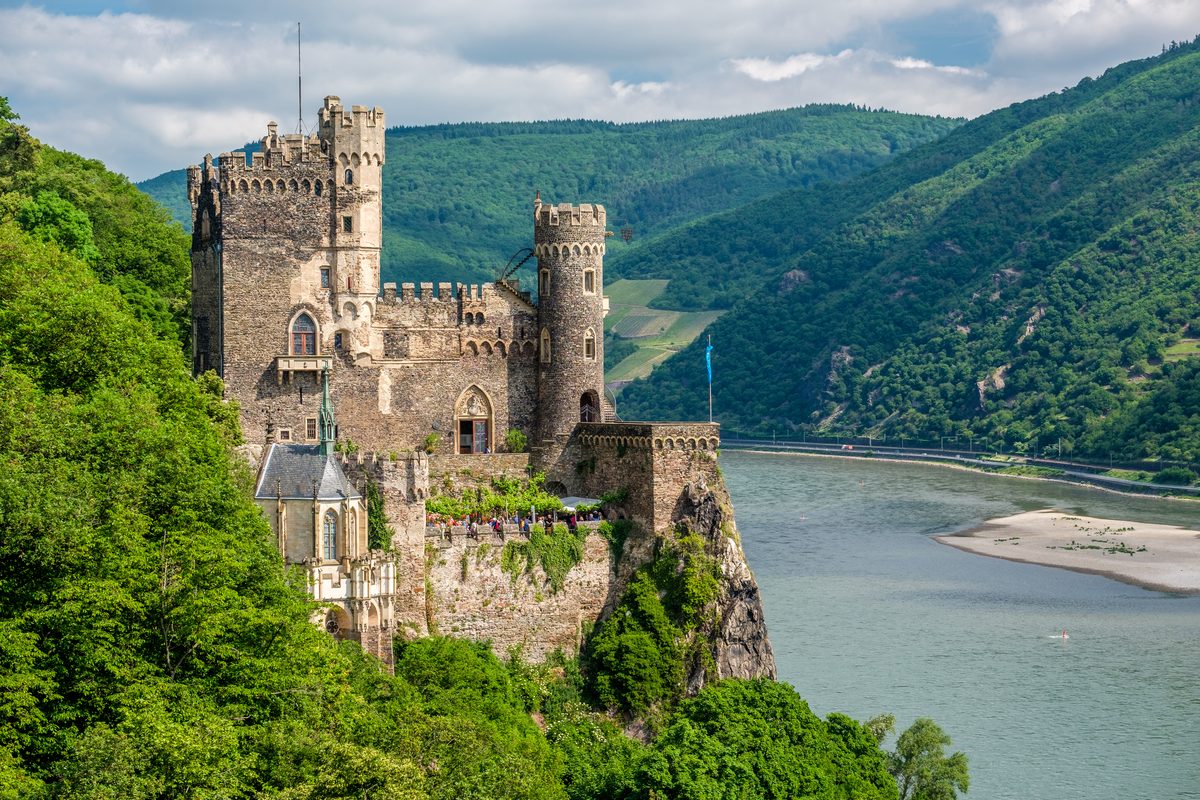
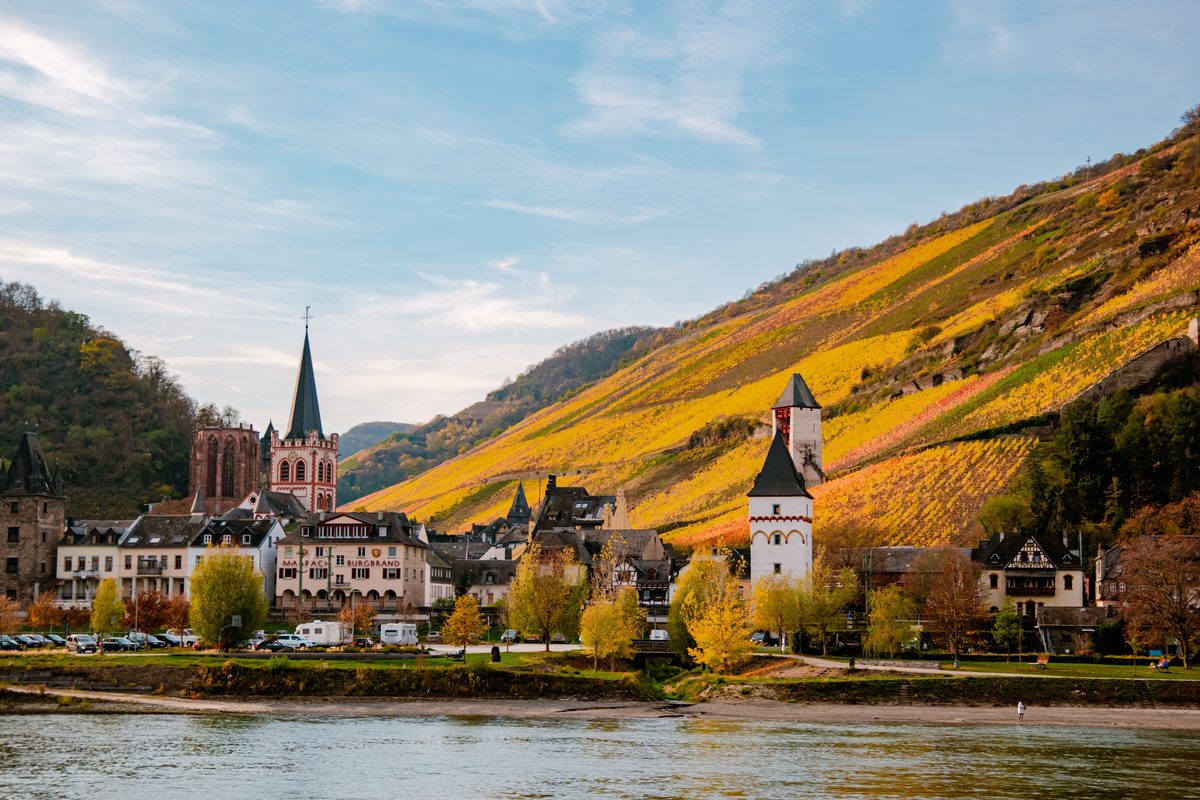
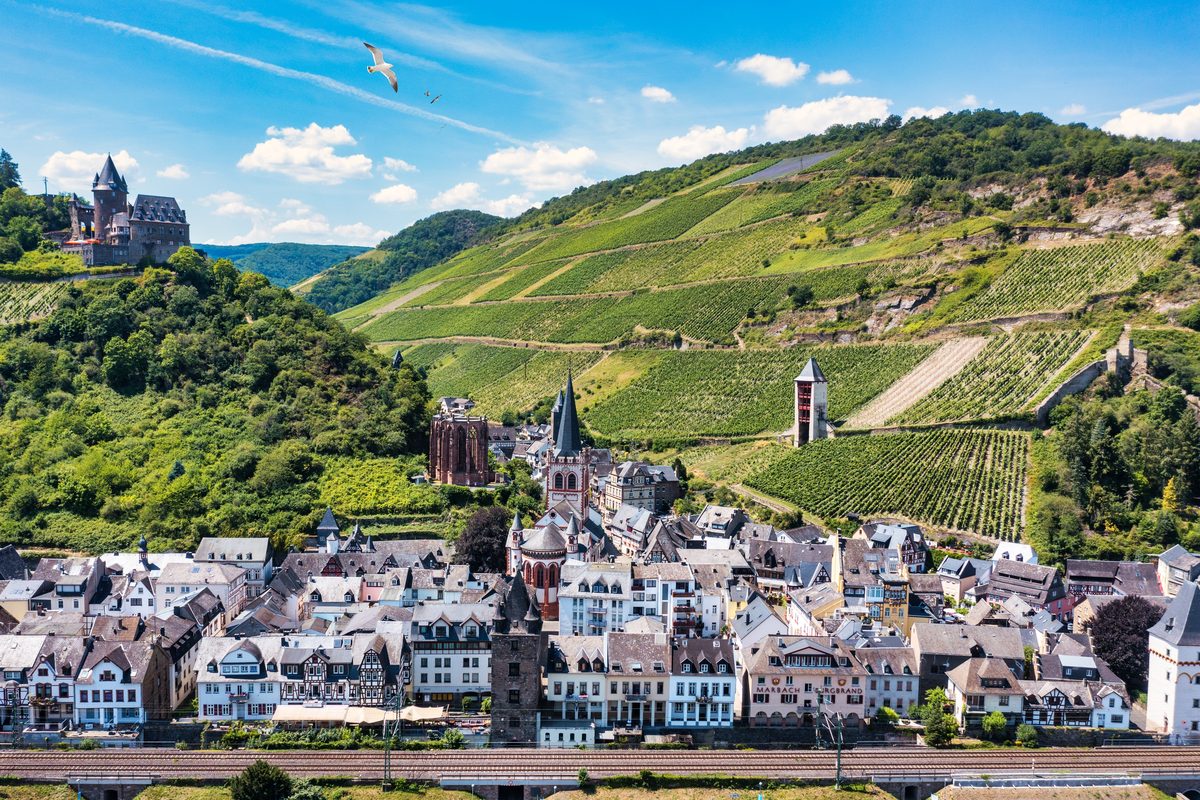
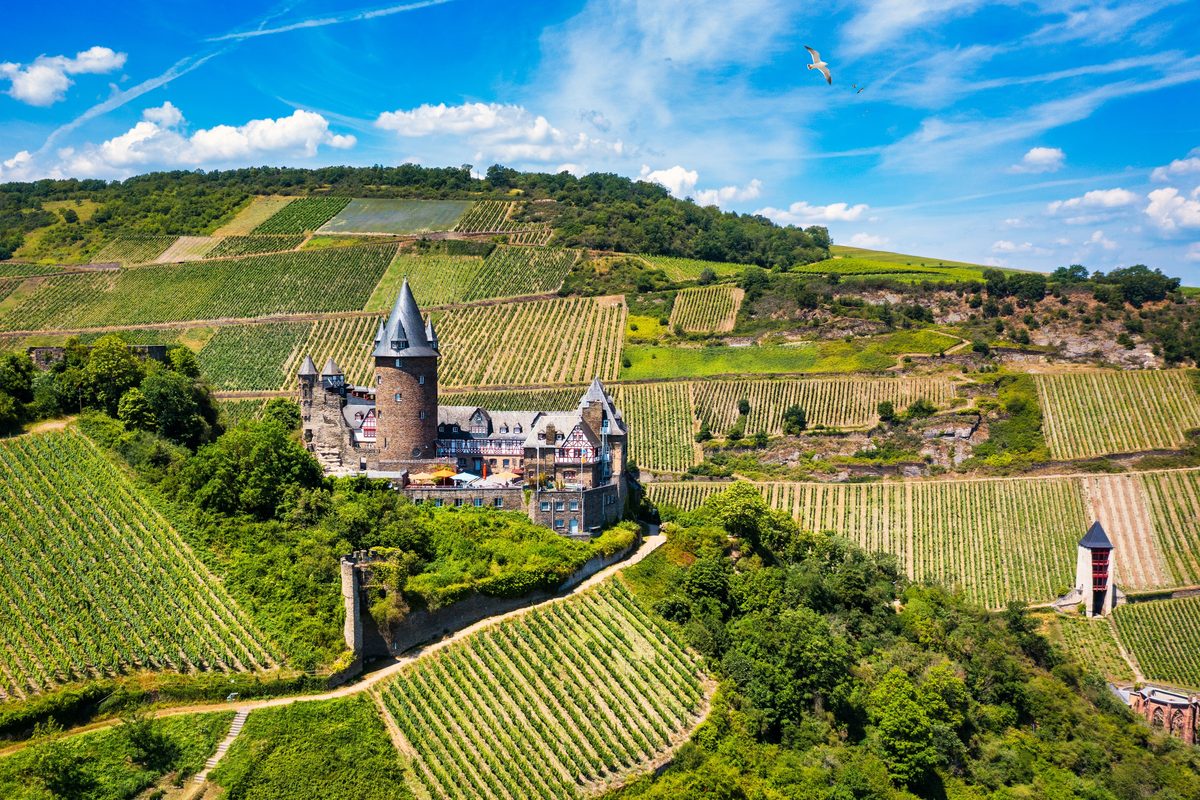
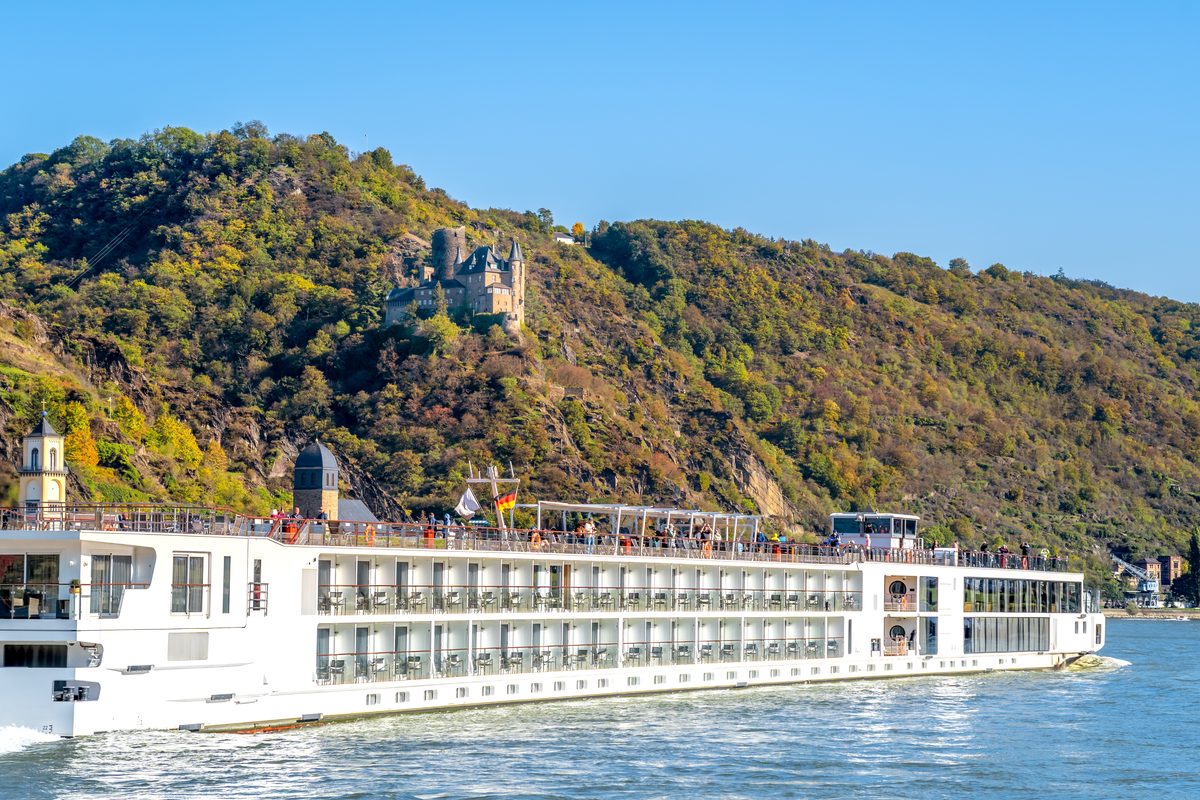
Most Amsterdam to Basel itineraries sail the gorge in daylight, usually on the day between Koblenz and Rüdesheim. Be on deck. Sailing south from Koblenz, look out for the Marksburg on its hill above Braubach, the great loop of the river at Boppard, St Goar with the ruins of Rheinfels above it and Burg Katz on the opposite bank, then the Loreley rock itself. Beyond it come the castle of Pfalzgrafenstein on its island in mid-river at Kaub, Bacharach under Stahleck Castle, and Rheinstein Castle on its rock before the valley opens out at Rüdesheim. Most lines make an event of it, with commentary on deck, and some serve local snacks and drinks as the castles go by. For many passengers it is the highlight of the week.
The Loreley
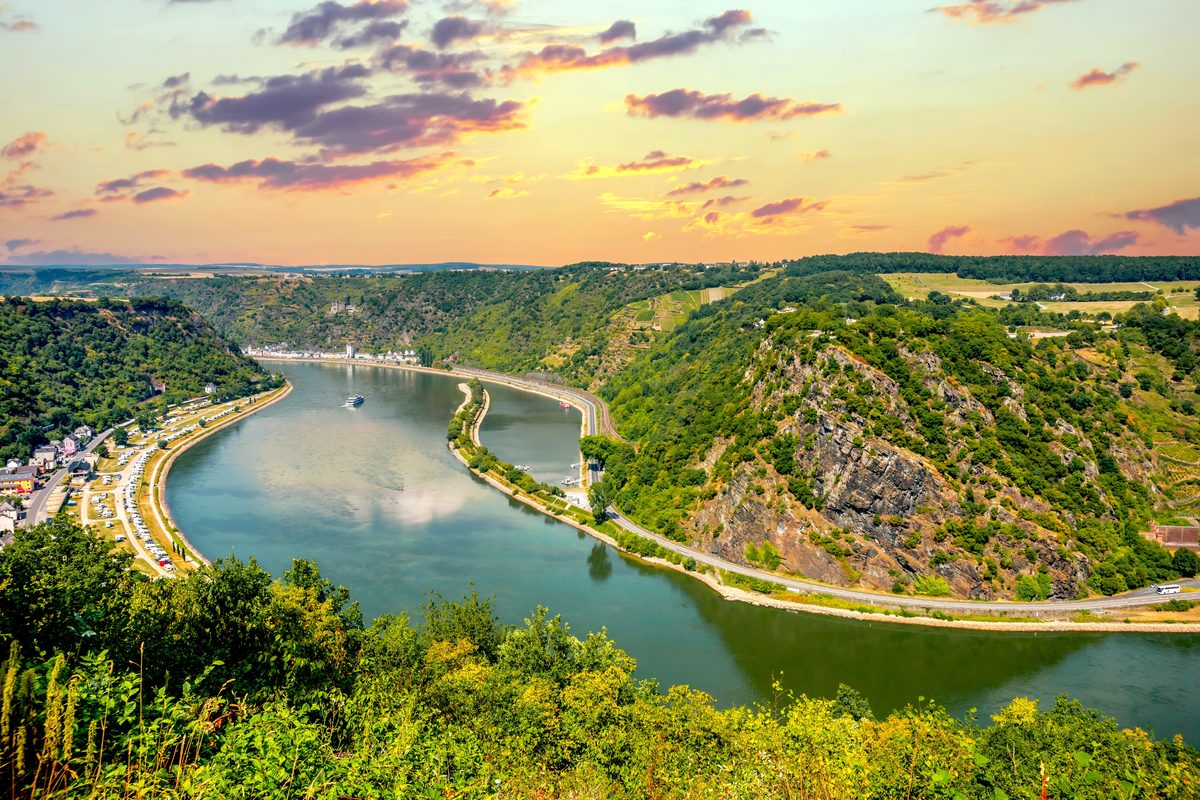
The Loreley is a slate cliff 132 metres high on the right bank at St Goarshausen, where the river bends sharply and runs narrow and deep. The rock was a danger to boatmen for centuries. The story of a golden-haired maiden who sat on the rock and lured them to their deaths was made famous by Heinrich Heine's poem, and it has been sung ever since.
A toll castle in mid-river
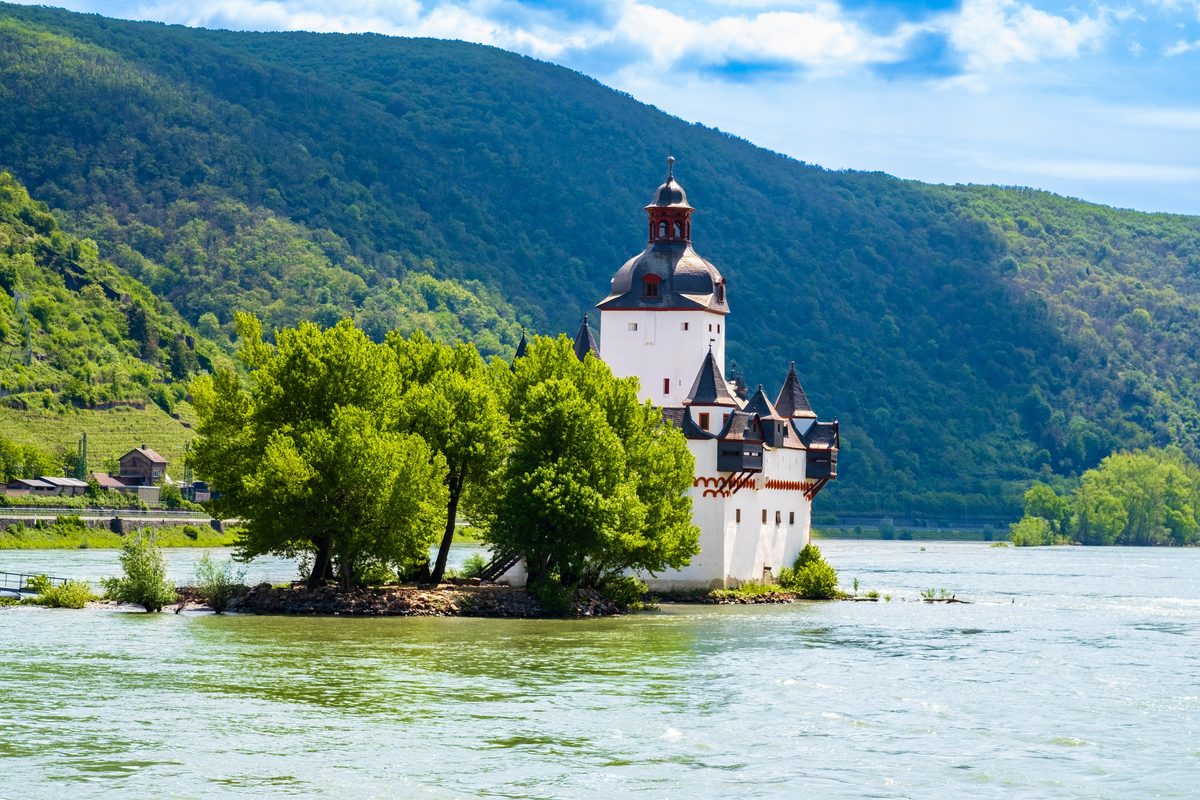
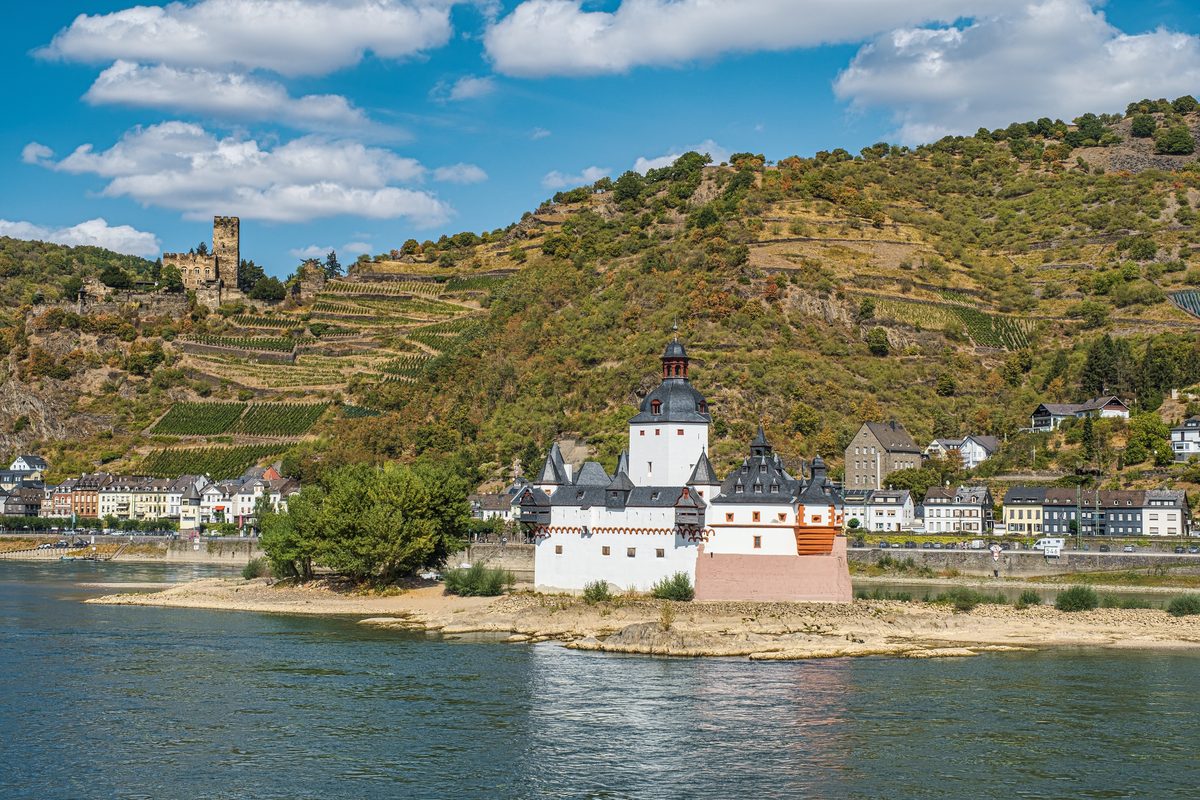
Pfalzgrafenstein, the white castle on its island at Kaub, was built in 1326 and 1327 by King Ludwig the Bavarian to collect tolls from passing ships, working together with Gutenfels Castle and the town of Kaub. Unlike most Rhine castles, it was never conquered or destroyed.
The wine
The gorge is Riesling country. The Middle Rhine is one of Germany's smallest wine regions, and its vines grow almost entirely on steep slate terraces worked largely by hand. At the southern end, Rüdesheim belongs to the Rheingau, one of Germany's most celebrated Riesling regions. A tasting in Rüdesheim or Boppard is one of the most popular excursions of the week.
When to go
Spring brings fresh green to the vineyards, early summer the long evenings on deck, and September and October the grape harvest and autumn colour. In a very dry summer the water at Kaub, in the middle of the gorge, can fall too low for some ships, and lines then change ships or use coaches; it is worth asking about when you book a late-summer sailing. See water levels on the Rhine page.
More from the gorge
Sources
- Upper Middle Rhine Valley UNESCO World Heritage Centre
- Upper Middle Rhine Valley: nomination file 1066 UNESCO World Heritage Centre
- Pfalzgrafenstein Castle Wikipedia
- Detours: Lorelei Goethe-Institut
- Lorelei Wikipedia
- Mittelrhein Wines of Germany (Deutsches Weininstitut)
- Wine temptations Romantischer Rhein Tourismus
- Rheingau Deutsches Weininstitut
- Anbau robuster Rebsorten schreitet voran (DWI vineyard figures 2023) Tageskarte
- Die bestockten Rebflächen in Hessen 2025 Hessisches Statistisches Landesamt
- Rhine water levels hit record lows Cruise Critic
- Riviera Rhine low water cancellations, September 2026 Deep Arrival